
Biography
Jiao Fang is a Collaborative PHD student at the Research Center for Eco-Environmental Science, Chinese Academy of Sciences (RCEES, CAS), Beijing. She focused on the control of algal-related water quality issues in source water reservoirs.
Education
Collaborative M.Sc./Ph.D. Environmental Engineering | Research Center for Eco-Environmental Sciences, Chinese Academy of Science
Ph.D. Environmental Engineering | China University of Mining and Technology
M.Sc. Municipal Engineering | Chang’an University
B.A. Water Supply and Drainage Science and Engineering | Chang’an University
Selected publications
-
026 Controlling filamentous cyanobacterial blooms requires adaptive, weather-informed strategy
The global expansion of filamentous cyanobacteria threatens water security due to their production of toxins and taste-and-odor compounds. As subsurface dwellers, filamentous cyanobacteria are resistant to conventional nutrient and flocculation controls, exposing a management gap. We developed an adaptive, forecast-guided framework that integrates predictive modeling with precision sediment resuspension (SR), in which SR-associated light attenuation likely contributes substantially to bloom suppression. A 2023-2024 survey of 40 reservoirs in eastern China showed filamentous dominance of over 80% biomass in half the systems. An XGBoost model (R² = 0.57) identified September-October as the highest-risk period, with over 80% of reservoirs affected. SR efficacy is light-dependent: it suppresses growth under low irradiance but can promote it under high light if shading shifts irradiance into the optimal range for filamentous taxa. We optimized SR through modulated sediment flux (0.1-5.2 g L⁻¹) to dynamically attenuate light in response to real-time forecasts. Field validation confirmed forecast-guided SR effectively limited Pseudanabaena via light control. This ecology-based management provides a scalable framework for sustainable water security under changing climates.
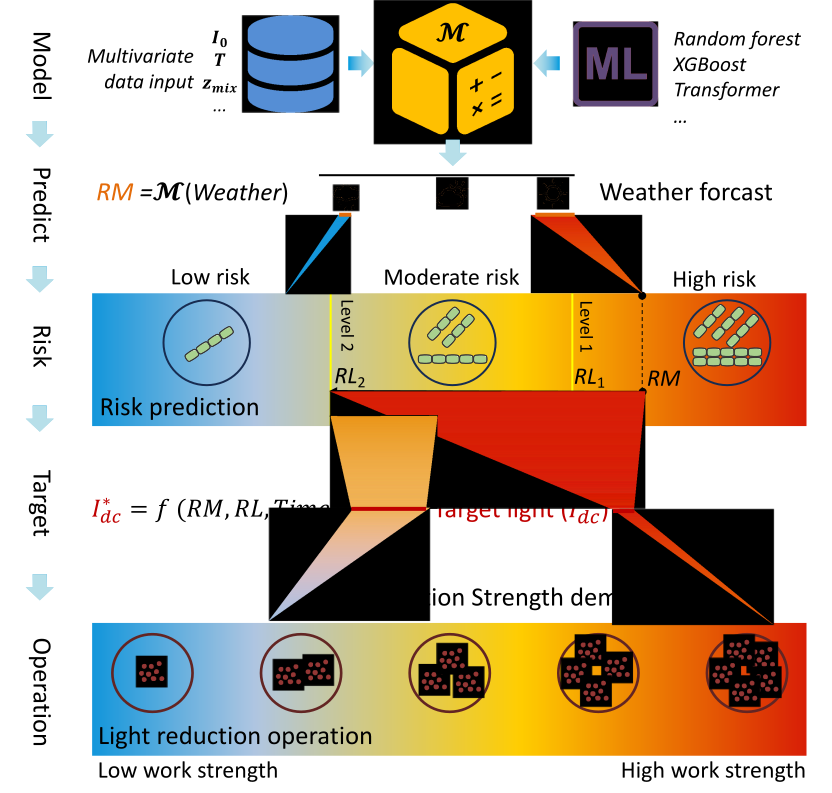 Sediment stirred up, / light dims, filaments retreat— / forecasts guide the cure.
 -
025 Spatiotemporal decoupling of littoral and lacustrine geosmin dynamics: Implications for early warning in drinking water reservoirs
The relationship between cyanobacterial niche characteristics and the transport dynamics of harmful metabolites to drinking water intakes remains poorly understood. This study integrated a national survey with a five-year high-frequency monitoring program to characterize these dynamics, focusing on the potent odorant geosmin. The national investigation revealed that 14% of surveyed sites exceeded the odor threshold of 10 ng L-1, indicating a non-negligible risk. In the YQ Reservoir, Planktothrix agardhii was identified as a primary producer. Monitoring revealed a distinct spatiotemporal decoupling: shallow littoral zones functioned as production centers where P. agardhii biomass peaked 8 days prior to the lacustrine intake. Time-lagged correlation analysis indicated that littoral biomass predicts intake geosmin concentrations with a 5-week lead time (R2 = 0.41). Ammonium was identified as the key regulatory factor, exhibiting its strongest correlation with geosmin in littoral zones (R2 = 0.37), though this linkage attenuated during transport. This proposed mechanistic transport model and tiered framework shift surveillance from reactive intake sampling to proactive littoral sentinel stations, establishing a critical predictive window for preventive intervention in reservoir-dependent water supplies.
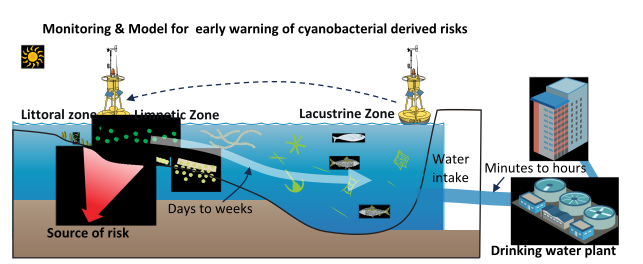 Littoral bloom foreshadows, / a five-week warning, then taste / downstream borne.
 -
023 Cyanobacterial crowding-out effects on metabolite partitioning: modeling 2-methylisoborneol (MIB) release dynamics and implications
2-Methylisoborneol (MIB), a potent cyanobacterial metabolite, impairs drinking water quality through taste-and-odor issues at trace concentrations. Despite its significant impact, the intracellular dynamics and environmental release mechanisms of MIB remain poorly characterized. We developed a mechanistic model of growth-phase dependent MIB release through controlled experiments with two producer strains. The model reveals that the extracellular MIB proportion ($f = e_{\text{MIB}}/t_{\text{MIB}}$) follows a consistent pattern: decreasing to a minimum at mid-log phase before rising and stabilizing ($f$: 0.4 to 0.6) during stationary phase, suggesting crowding-induced cell lysis drives release dynamics. Application of the model to Lake Taihu successfully reconstructed two odor events during 2022-2023, elucidating both the spatiotemporal development of MIB producers and identifying critical risk thresholds at ~15°C and >30°C under moderate light (0.1-0.4 mol m-2 d-1) - patterns undetectable by conventional monitoring. Our findings demonstrate that physiological transitions, rather than just biomass accumulation, control odorant release. This framework may extend to other algal metabolites (e.g., geosmin, cyanotoxins), offering broader predictive capability. By linking cellular processes to water quality risks, our approach enables proactive management of cyanobacterial contaminants, informing both early warning systems and operational guidance for oxidant-type optimization to prevent large-scale release of hazardous compounds from algal cells.
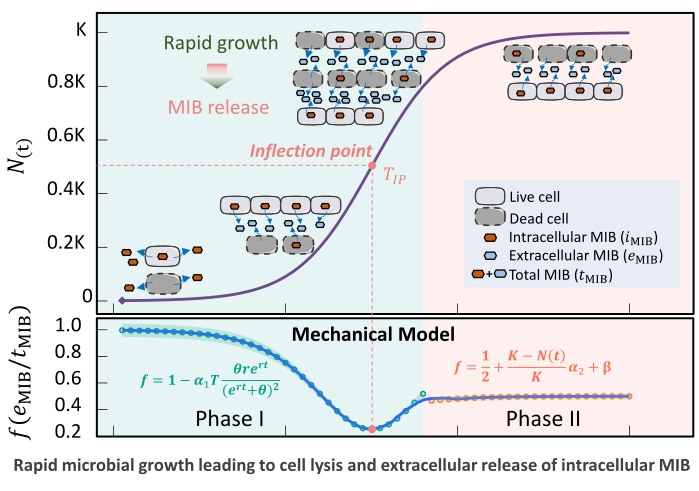 A scent on the water, / Born from a crowded cell's burst, / A warning grows cold.
 -
022 Effects of Oxygenation Resuspension on DOM Composition and Its Role in Reducing Dissolved Manganese in Drinking Water Reservoirs
Anaerobic conditions in source water sediments are a key driver of manganese (Mn) release in drinking water systems. Enhancing sediment oxidation can inhibit Mn release, but the mechanisms of Mn speciation under varying oxidative conditions remain unclear. This study examined sediment exposure to oxygenated water layers at controlled dissolved oxygen levels (0, 2, 5, 7 mg L-1) through laboratory simulations. Results showed Mn release is negatively correlated with DO ($R2=0.93$, $p$=0.034), with oxygen driving reactions between dissolved organic matter (C2 and C3 components) and forming functional groups (-OH, -COOH) that remove Mn through adsorption or complexation (C2: $R2$=0.57, $p$<0.001; C3: $R2$=0.53, $p$<0.001). Field studies in six reservoirs identified operational thresholds for sediment resuspension to mitigate Mn risks (compensation threshold: 17.4 μg L-1; risk threshold: China: 95.5 μg L-1; WHO: 70.8 μg L-1^). These findings clarify Mn-organic matter interactions and can provide practical guidance for Mn and algae removal in source water systems.
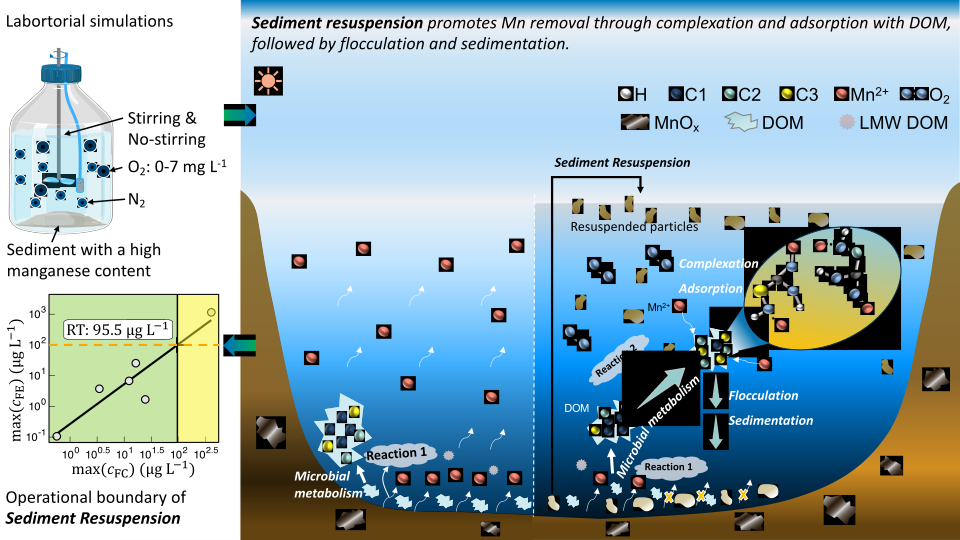 Mud whispers iron, / oxygen sings it silent— / clean water follows.
 -
020 Mitigating harmful cyanobacterial blooms in drinking water reservoirs through in-situ sediment resuspension
Mitigating harmful cyanobacterial blooms is a global challenge, particularly crucial for safeguarding source water. Given the limitations of current technologies for application in drinking water reservoirs, we propose an innovative strategy based on in-situ sediment resuspension (SR). This method's effectiveness in cyanobacterial control and its potential impacts on water quality were assessed through laboratory culture experiments and further validated via field applications in five drinking water reservoirs. The results revealed that SR could significantly mitigate cyanobacterial growth, evidenced by the treated sets (removal rate: 3.82×10⁶ cells L-1 d-1) compared to the control set (growth rate: 2.22×10⁷ cells L-1 d-1) according to the laboratory experiments. The underlying mechanisms identified included underwater light reduction (2.38× increase in extinction coefficient) and flocculation and entrainment of cells by resuspended particles (30% reduction per operation). Additional contributions were noted in the reduction of bioavailable phosphate and remediation of anaerobic sediment characterized by increased redox potential. This facilitated the oxidation of iron, which in turn promoted the co-precipitation of phosphate (removal rate: 46 μg L-1 d-1) and inhibited its release from the sediment. The SR operation, devoid of importing extra substances, represents a safe and economical technology for controlling harmful cyanobacteria in drinking water reservoirs.
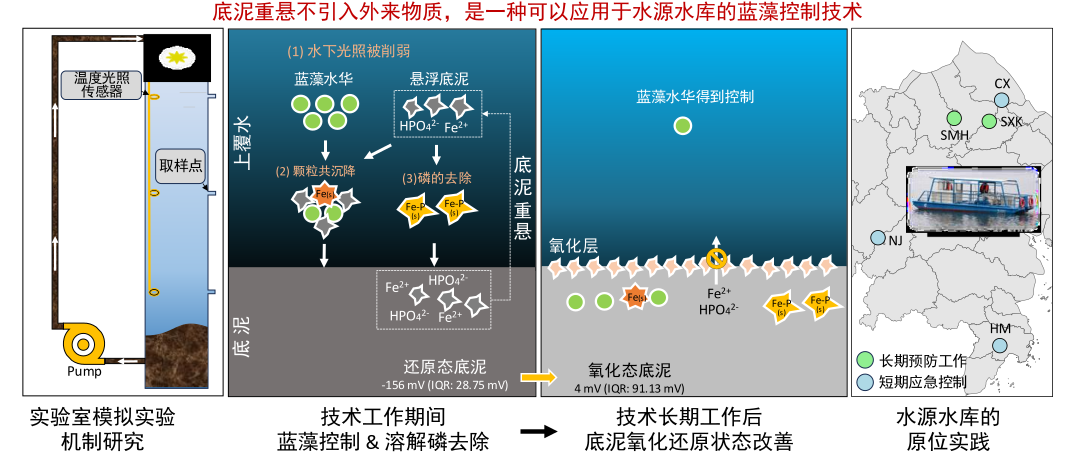 Cyanobacterial bloom in source water? / No solution? Try / in-situ Sediment Resuspension
 -
019 Early warning of MIB episode based on gene abundance and expression in drinking water reservoirs
Cellular 2-methylisoborneol (MIB) yield of cyanobacteria varies under different conditions according to culture studies and field investigations, the causal mechanism remains unclear and results in ineffective MIB prediction. Through an intensive field survey during an MIB episode produced by Pseudanabaena cinerea in QCS reservoir, we demonstrated that MIB synthesis (mic) gene abundance (DNA) and expression (RNA) might be useful as parameters for early warning of MIB production. It was found that the abundance of mic DNA and RNA peaked ahead of MIB concentrations by 10 and 7 days, respectively. In addition, the RNA abundance (R2 = 0.45, p < 0.01) showed a slightly higher correlation with MIB compared to DNA abundance (R2 = 0.37, p < 0.01), suggesting that the conditions for the growth of Pseudanabaena cinerea might be slightly different from those for mic gene expression, which was verified by a culture experiment. The highest cell growth was obtained under 36 μmol photons m-2 s-1, while the highest cellular MIB yield and mic gene expression level were obtained under 85 μmol photons m-2 s-1. Our results clearly supported that light intensity was the virtual regulator governing the mic gene expression within the controlled culture experiment and the actual MIB episode in the reservoir. Besides these results, we developed an early warning model using mic gene abundance as an indicator of MIB episodes, which was verified in two other reservoirs. Our findings highlight the effect of light intensity on mic gene expression and MIB synthesis and provide an early warning tool targeting MIB episode prediction, which therefore should be of importance for source water authorities.
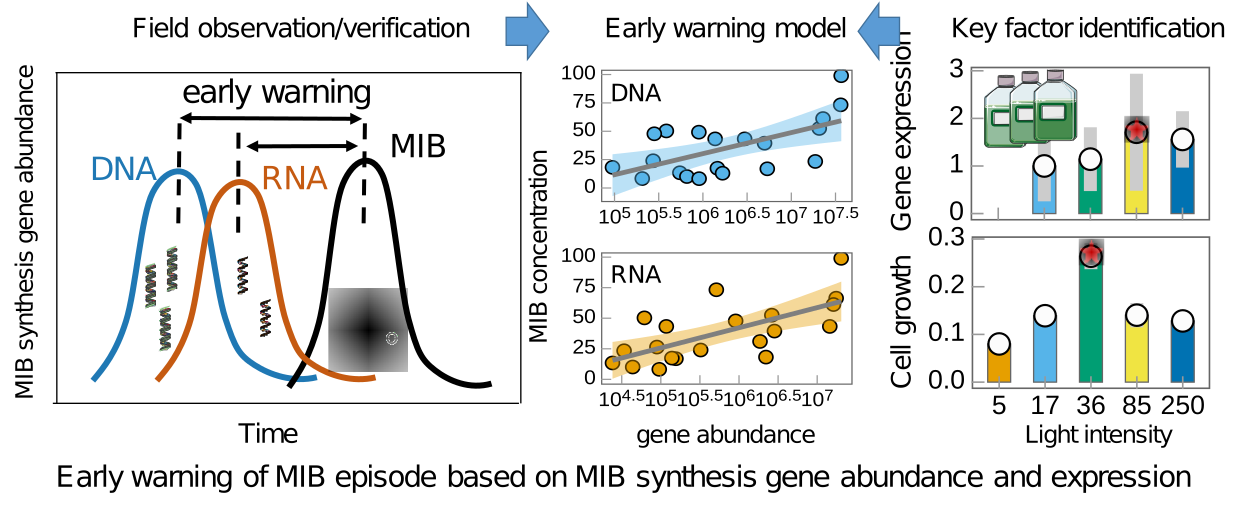 How to know when MIB episode comes? / Gene may tell you. Try / qPCR with mic gene!
 -
018 MIB-derived odor management based upon hydraulic regulation in small drinking water reservoirs: Principle and application
The musty odorant (2-methylisoborneol, MIB) is prevalent in source water reservoirs and has become one of the major challenges for drinking water quality. This study proposes an approach to control the growth of MIB-producing cyanobacteria in a small reservoir based on hydraulic regulation, according to the results of long-term field investigations, laboratory culture experiments, model construction, and field application. Field investigations found that longer hydraulic retention time (HRT) is a factor that triggers MIB episodes. The culture study revealed that the maximum cell density, growth rate of MIB-producing Planktothricoides raciborskii, and MIB concentration are determined by the HRT (R2= 0.94, p-value < 0.001) and can be minimized by decreasing the HRT to less than 10 $d$. On this basis, an HRT regulation model was constructed and validated by field investigation, and critical HRT values were evaluated for 14 cyanobacteria genera. By decreasing the HRT to 5.4 ± 0.8 $d$, which is lower than the critical value of 7.5 ~ 15.0 $d$, an MIB episode was successfully terminated in ZXD Reservoir in 2021. The results suggest that the proposed principle can provide a scientific basis for HRT regulation, which has been proved to be effective and feasible. This approach avoids negative impacts on water quality, does not require extra investment in engineering infrastructure, and in some cases may be applied readily by changing existing operational procedures. Therefore, HRT-based regulation is a promising strategy targeting MIB control and possibly for other cyanobacterial-derived water quality problems in small reservoirs.
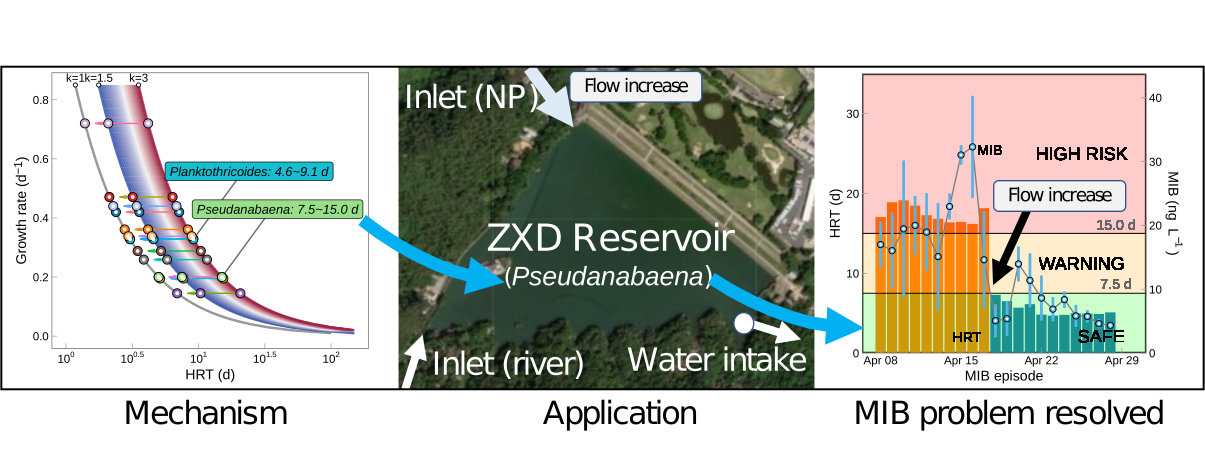 Small reservoirs / Adjust HRT to halt / MIB odors.
 -
017 Driving forces for the growth of MIB-producing Planktothricoides raciborskii in a low-latitude reservoir
In comparison with the middle- and high-latitude regions, the low-latitude regions are less associated with the occurrence of 2-methylisoborneol (MIB) episodes, since most of the previously identified MIB producers favor moderate/low light/temperature conditions. Here, we report a serious MIB outbreak over the period from Jul. 2018 to Jun. 2019 in a low-latitude reservoir with a mean annual water temperature of 25.6 °C. The MIB episode lasted for a long period, from Jul. 2018 to Jan. 2019, and Planktothricoides raciborskii was confirmed to be the main MIB producer. The growth characteristics of P. raciborskii were explored through both laboratory culturing and on-site verification experiments. The results indicated that this strain was not nutrient-sensitive at TN > 800 μg L−1 and TP > 10 μg L−1, but favored moderate light intensity (54 μmol photon m−2·s−1) and high temperature (30 °C). The two bloom-forming genera, Limnothrix and Aphanizomenon, favoring lower temperature and similar or relatively higher light intensity, showed much greater proliferation, about 13 folds (Limnothrix) and 58 folds (Aphanizomenon), from Dec. to Jun.; by contrast, the high water temperature (29.9 ± 2.8 °C) and light intensity (189.1 ± 87.6 μmol photon m−2·s−1) from Jul. to Nov. were not favorable to Limnothrix or Aphanizomenon, which might have created an opportunity for the growth of MIB-producing P. raciborskii. In addition, we also found that high temperature could promote the release of MIB from P. raciborskii cells, therefore exerting increased pressure on drinking water treatment processes.
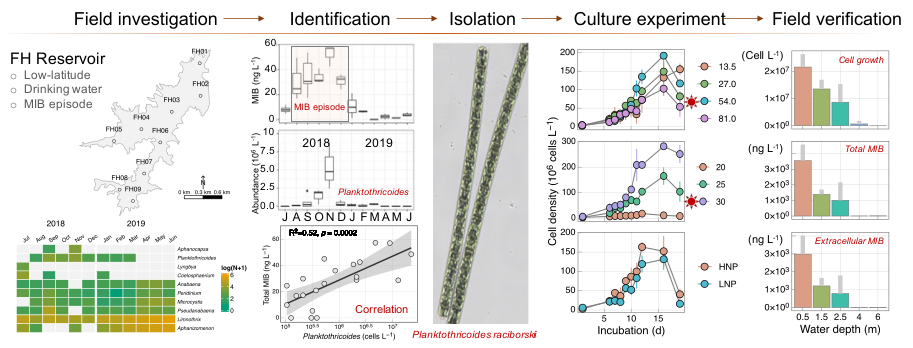 MIB persists long / Warm reservoirs bloom anew / Odor challenges.
 -
016 Biosynthesis of 2-methylisoborneol is regulated by chromatic acclimation of Pseudanabaena
Cyanobacteria can sense different light color by adjusting the components of photosynthetic pigments including chlorophyll a (Chl a) , phycoerythrin (PE), and phycocyanin (PC), etc. Filamentous cyanobacteria are the main producer of 2‐methylisoborneol (MIB) and many can increase their PE levels so that they are more competitive in subsurface layer where green light is more abundant, and have caused extensive odor problems in drinking water reservoirs. Here, we identified the potential correlation between MIB biosynthesis and ambient light color induced chromatic acclimation (CA) of a MIB-producing Pseudanabaena strain. The results suggest Pseudanabaena regulates the pigment proportion through Type III CA (CA3), by increasing PE abundance and decreasing PC in green light. The biosynthesis of MIB and Chl a share the common precursor, and are positively correlated with statistical significance regardless of light color ($R2 = 0.68$, $p < 0.001$). Besides, the PE abundance is also positively correlated with Chl a in green light ($R2 = 0.57$, $p = 0.019$) since PE is the antenna that can only transfer the energy to PC and Chl a. In addition, significantly higher MIB production was observed in green light since more Chl a was synthesized.
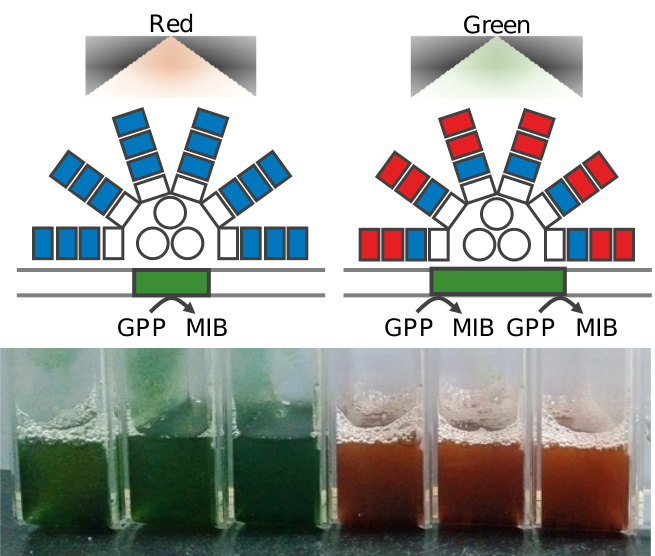 Green light promotes / MIB synthesis and PE / Odor risks increase
 DOI
DOI