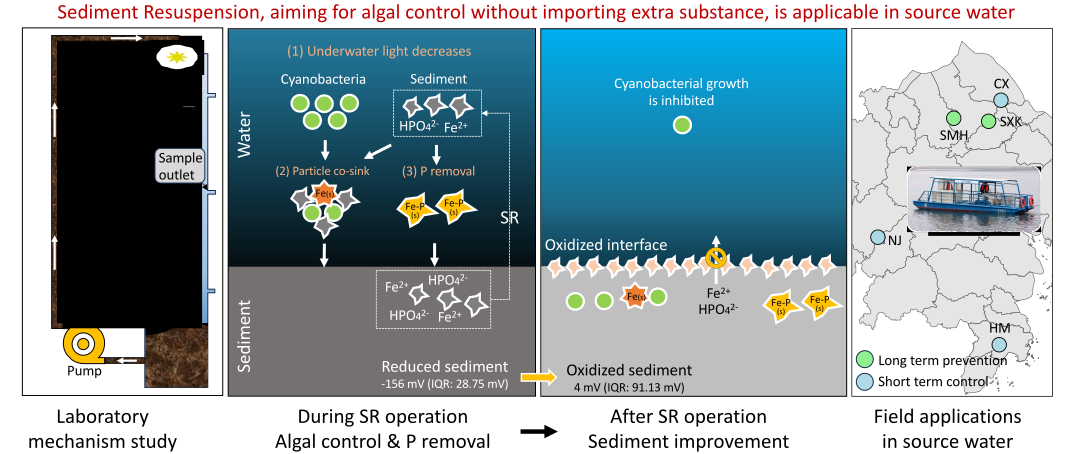
近日,中国科学院生态环境研究中心杨敏研究员团队在Water Research期刊发表题为“Mitigating harmful cyanobacterial blooms in drinking water reservoirs through in-situ sediment resuspension”的研究论文(DOI: 10.1016/j.watres.2024.122509)。
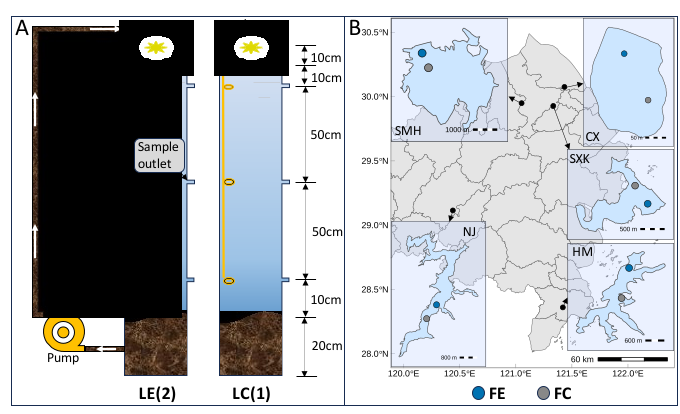
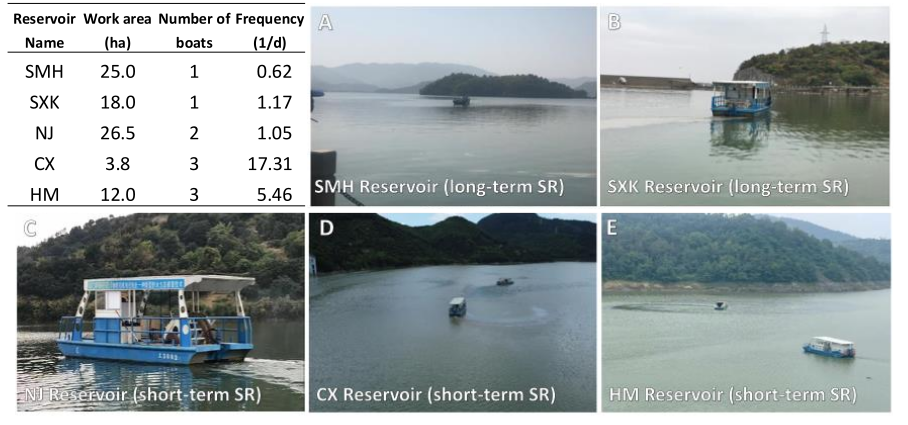
The figure illustrates the laboratory simulators (A) and five drinking water reservoirs (B) where Sediment Resuspension (SR) technology was implemented. Two simulators were assembled with pump to perform SR, and one simulator without SR. Long-term SR operations were conducted in SMH Reservoir and SXK Reservoir to prevent cyanobacterial bloom occurrences, while short-term SR operations were carried out in HM Reservoir, NJ Reservoir, and CX Reservoir. The designation ‘LC’ and ‘FC’ indicates simulators or sites without SR operations, serving as untreated controls, whereas ‘LE’ and ‘FE’ denotes simulators or sites where SR operations were conducted.
模拟实验评估有害藻控制效果
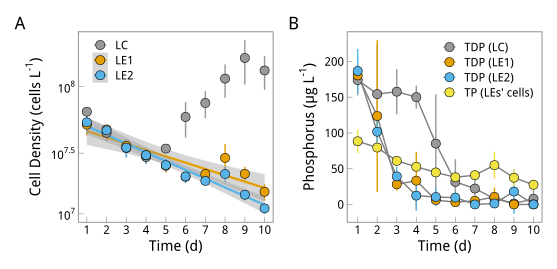
The dynamics of Microcystis cell density (A) and phosphorus concentration (B) in laboratory simulators, comprising two simulators with Sediment Resuspension (SR) operations (designated as LE1 and LE2), and one simulator without SR serving as an untreated control (LC). Additionally, panel B illustrates the phosphorus content within the cell.
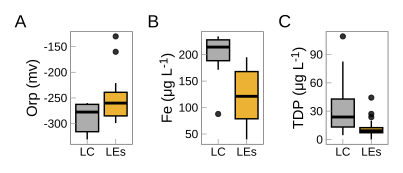
The comparison of Oxidation-Reduction Potential (ORP) in the surface-resuspended sediment (A) and dissolved iron concentration in the overlying water (B) among laboratory simulators over the initial 10 days. This includes two simulators with Sediment Resuspension (SR) operations (LE1, LE2) and one without SR serving as an untreated control (LC) were shown. Additionally, panel C illustrates the comparison of dissolved phosphorus concentration in the overlying water between LC and LEs after the cessation of SR operations from day 11 onwards (day 11–20 and day 31–40).
水库实际应用效果
The figure displayed the field applications of SR operations in five drinking water reservoirs: SMH Reservoir (A), SXK Reservoir (B), NJ Reservoir (C), CX Reservoir (D) and HM Reservoir (E).