Jinping Lu
Anqing Normal University
Jinping Lu is currently working at Anqing Normal University.
-
018 MIB-derived odor management based upon hydraulic regulation in small drinking water reservoirs: Principle and application
The musty odorant (2-methylisoborneol, MIB) is prevalent in source water reservoirs and has become one of the major challenges for drinking water quality. This study proposes an approach to control the growth of MIB-producing cyanobacteria in a small reservoir based on hydraulic regulation, according to the results of long-term field investigations, laboratory culture experiments, model construction, and field application. Field investigations found that longer hydraulic retention time (HRT) is a factor that triggers MIB episodes. The culture study revealed that the maximum cell density, growth rate of MIB-producing Planktothricoides raciborskii, and MIB concentration are determined by the HRT (R2= 0.94, p-value < 0.001) and can be minimized by decreasing the HRT to less than 10 $d$. On this basis, an HRT regulation model was constructed and validated by field investigation, and critical HRT values were evaluated for 14 cyanobacteria genera. By decreasing the HRT to 5.4 ± 0.8 $d$, which is lower than the critical value of 7.5 ~ 15.0 $d$, an MIB episode was successfully terminated in ZXD Reservoir in 2021. The results suggest that the proposed principle can provide a scientific basis for HRT regulation, which has been proved to be effective and feasible. This approach avoids negative impacts on water quality, does not require extra investment in engineering infrastructure, and in some cases may be applied readily by changing existing operational procedures. Therefore, HRT-based regulation is a promising strategy targeting MIB control and possibly for other cyanobacterial-derived water quality problems in small reservoirs.
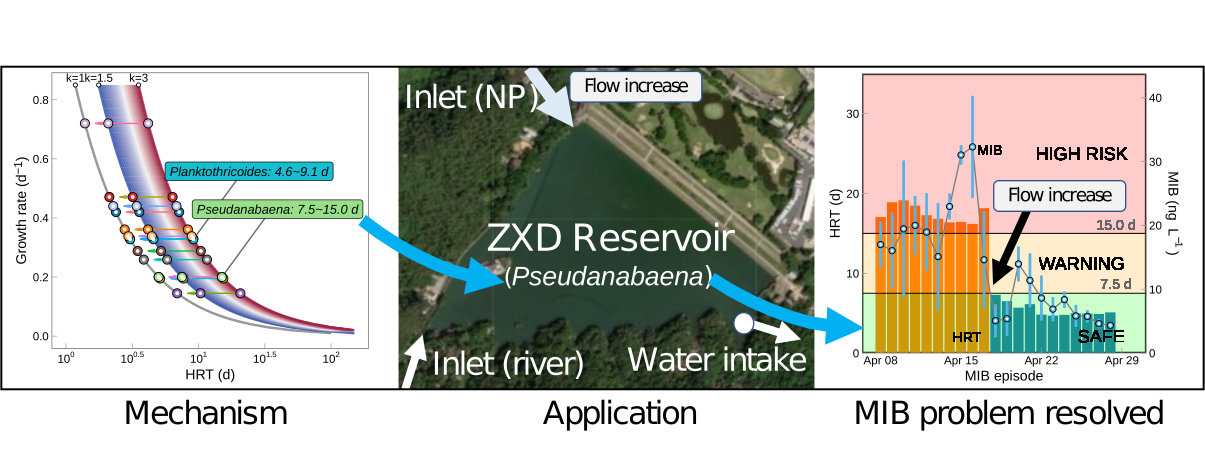 Small reservoirs / Adjust HRT to halt / MIB odors.
 -
017 Driving forces for the growth of MIB-producing Planktothricoides raciborskii in a low-latitude reservoir
In comparison with the middle- and high-latitude regions, the low-latitude regions are less associated with the occurrence of 2-methylisoborneol (MIB) episodes, since most of the previously identified MIB producers favor moderate/low light/temperature conditions. Here, we report a serious MIB outbreak over the period from Jul. 2018 to Jun. 2019 in a low-latitude reservoir with a mean annual water temperature of 25.6 °C. The MIB episode lasted for a long period, from Jul. 2018 to Jan. 2019, and Planktothricoides raciborskii was confirmed to be the main MIB producer. The growth characteristics of P. raciborskii were explored through both laboratory culturing and on-site verification experiments. The results indicated that this strain was not nutrient-sensitive at TN > 800 μg L−1 and TP > 10 μg L−1, but favored moderate light intensity (54 μmol photon m−2·s−1) and high temperature (30 °C). The two bloom-forming genera, Limnothrix and Aphanizomenon, favoring lower temperature and similar or relatively higher light intensity, showed much greater proliferation, about 13 folds (Limnothrix) and 58 folds (Aphanizomenon), from Dec. to Jun.; by contrast, the high water temperature (29.9 ± 2.8 °C) and light intensity (189.1 ± 87.6 μmol photon m−2·s−1) from Jul. to Nov. were not favorable to Limnothrix or Aphanizomenon, which might have created an opportunity for the growth of MIB-producing P. raciborskii. In addition, we also found that high temperature could promote the release of MIB from P. raciborskii cells, therefore exerting increased pressure on drinking water treatment processes.
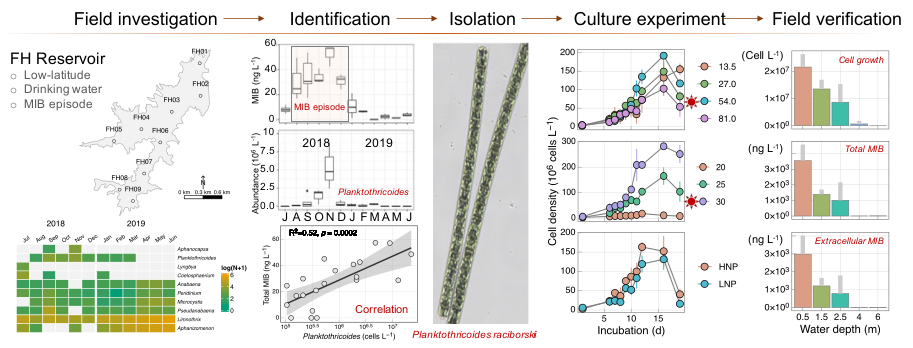 MIB persists long / Warm reservoirs bloom anew / Odor challenges.
 -
015 Evaluation of the MIB-producing potential based on real-time qPCR in drinking water reservoirs
Cyanobacteria release 2-methylisoborneol (MIB) as a secondary metabolite. Here, we propose a reverse transcription quantitative real-time PCR (RT-qPCR) based method to evaluate the MIB-producing potential in source water by detecting the MIB-synthesis gene (mic). A MIBQSF/R primer set was designed based on 35 mic gene sequences obtained from 12 pure-cultured MIB-producing strains and 23 sequences from the NCBI database. This primer set successfully identified all known 43 MIB-producing cyanobacterial strains (12 from this study and 31 from the NCBI database), belonging to different genera, showing a wider coverage than previous primer sets. The efficiency of the method was proved by the amplification efficiency (E = 91.23%), R2 of the standard curve (0.999), the limit of detection (LOD, 5.7 fg μL−1), and the limit of quantification (LOQ, 1.86 × 10⁴ gene copies μL−1). Further, the method was verified by the correlation between the mic gene abundance and MIB concentration 50 field samples from different reservoirs (R2 = 0.614, p < 0.001) and one reservoir (R2 = 0.752, p < 0.001), suggesting its potential as an alternative warning tool to evaluate the risk of MIB problems in source water.
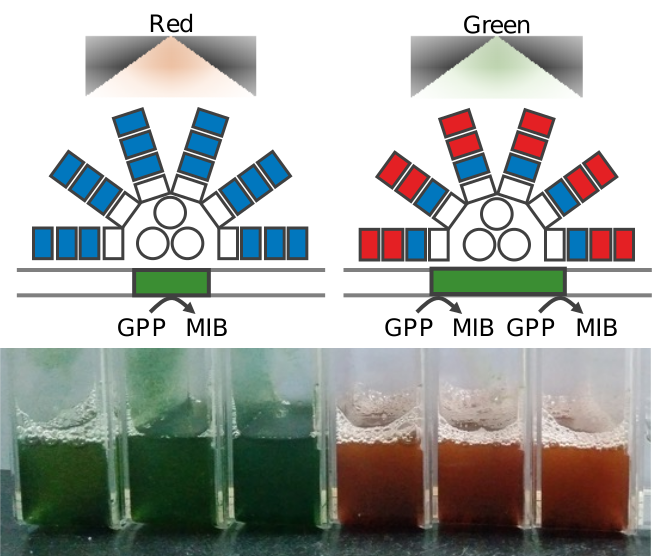 Green light promotes / MIB synthesis and PE / Odor risks increase
 -
014 Light-Dominated Selection Shaping Filamentous Cyanobacterial Assemblages Drives Odor Problem in a Drinking Water Reservoir
Filamentous cyanobacteria have substantial niche overlap, and the causal mechanism behind their succession remains unclear. This has practical significance since several filamentous genera are the main producers of the musty odorant 2-methylisoborneol (MIB), which lead to odor problems in drinking water. This study investigates the relationships between two filamentous cyanobacteria, the MIB-producing genus Planktothrix and the non-MIB-producing genus Pseudanabaena, in a drinking water reservoir. We firstly identified their niche characteristics based on a monitoring dataset, combined this information with culture experiments and developed a niche-based model to clarify these processes. The results reveal that the optimal light requirements of Pseudanabaena (1.56 mol m-2d-1) are lower than those of Planktothrix (3.67 mol m-2d-1); their light niche differentiation led to a fundamental replacement of Planktothrix (2013) by Pseudanabaena (2015) along with MIB decreases in this reservoir during 2013 and 2015. This study suggests that light is a major driving force responsible for the succession between filamentous cyanobacteria, and that subtle niche differentiation may play an important role in shaping the filamentous cyanobacterial assemblages that drives the MIB odor problems in drinking water reservoirs.
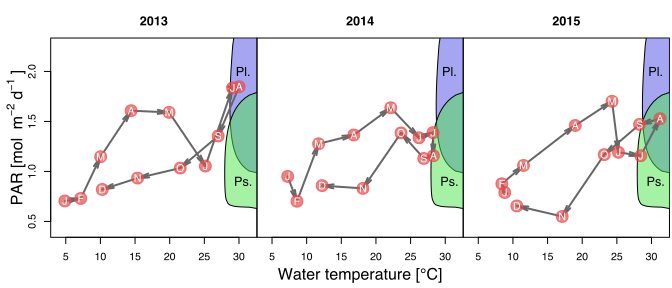 Light shapes their niche / Pseudanabaena reigns / Odors subside slow
 -
012 Ecological niche and *in-situ* control of MIB producers in source water
Odor problems in source water caused by 2-methylisoborneol (MIB) have been a common issue in China recently, posing a high risk to drinking water safety. The earthy-musty odorant MIB has an extremely low odor threshold (4–16 ng L-1) and is hard to remove via conventional processes in drinking water plants (DWP), and therefore could easily provoke complaints from consumers. This compound is produced by a group of filamentous cyanobacteria, mainly belonging to Oscillatoriales. Different from the well-studied surface-blooming Microcystis, filamentous cyanobacteria have specific niche characteristics that allow them to stay at a subsurface or deep layer in the water column. The underwater bloom of these MIB producers is therefore passively determined by the underwater light availability, which is governed by the cell density of surface scum. This suggests that drinking water reservoirs with relatively low nutrient contents are not able to support surface blooms, but are a fairly good fit to the specialized ecological niche of filamentous cyanobacteria; this could explain the widespread odor problems in source water. At present, MIB is mainly treated in DWP using advanced treatment processes and/or activated carbon, but these post-treatment methods have high cost, and not able to deal with water containing high MIB concentrations. Thus, in situ control of MIB producers in source water is an effective complement and is desirable. Lowering the underwater light availability is a possible measure to control MIB producers according to their niche characteristics, which can be obtained by either changing the water level or other measures.
 MIB lingers low, / Hidden where the light won’t go— / Waters whisper woes.
 DOI
DOI