At the Third Aquatic Resources and Blue Economy Conference (ARBEC III) in Nairobi on 25 November 2026, Ming Su of the Research Center for Eco-Environmental Sciences (RCEES), Chinese Academy of Sciences, delivered the keynote “Translating drinking-water cyanobacterial risk management from China to Lake Victoria.” He presented China’s approach to identifying and managing odour-producing cyanobacteria and introduced joint China–Kenya research in Lake Victoria.
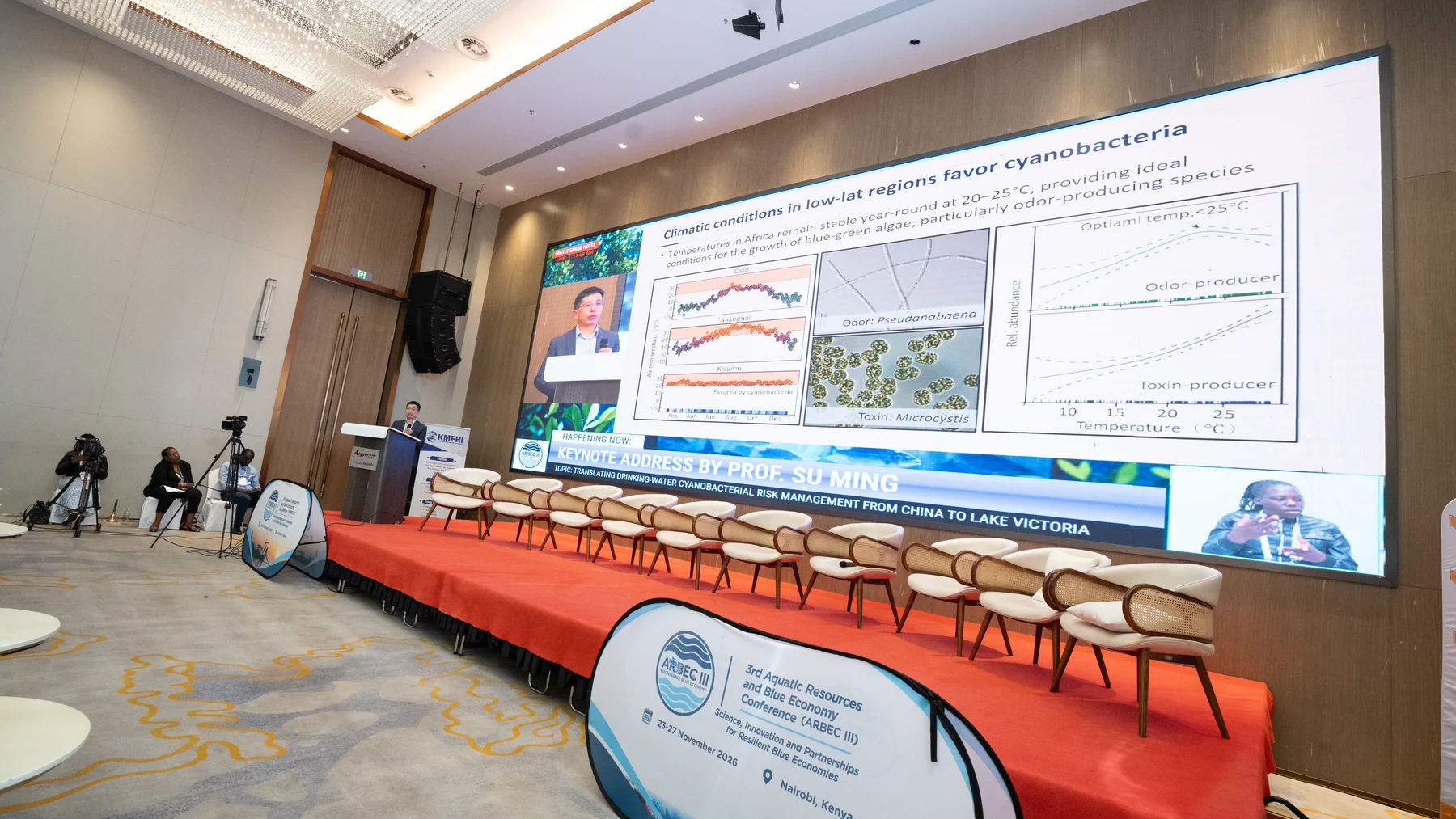
Ming Su delivers his ARBEC III keynote, with the screen showing research on cyanobacterial growth and odour production in low-latitude regions.
Ming Su explained that some filamentous cyanobacteria can produce 2-methylisoborneol (MIB) and affect drinking-water quality even without forming visible blooms. The team developed a single-cell epicPCR method that shortens identification from about six months to three weeks. Based on the organisms’ preference for shallow water, moderate nutrient levels, and longer hydraulic retention times, the team also proposed habitat-based control through adjustments to turbidity, water level, and retention time.
The approach has been applied at large source-water reservoirs in China, including Shanghai’s Qingcaosha Reservoir, where it reduced MIB risk by more than 80%. With the Kenya Marine and Fisheries Research Institute, the team is now monitoring nine gulf sites and one lake site in Winam Gulf. Preliminary results show dominance by filamentous cyanobacteria and elevated pollution risks near river mouths.
The work is supported by the NSFC Sustainable Development International Cooperation Science Program (SDIC) and implemented by RCEES, Nanjing University of Information Science and Technology, Lihe Technology (Hunan) Co., Ltd., and KMFRI. It aims to strengthen drinking-water safety and support UN Sustainable Development Goal 6 in East Africa.
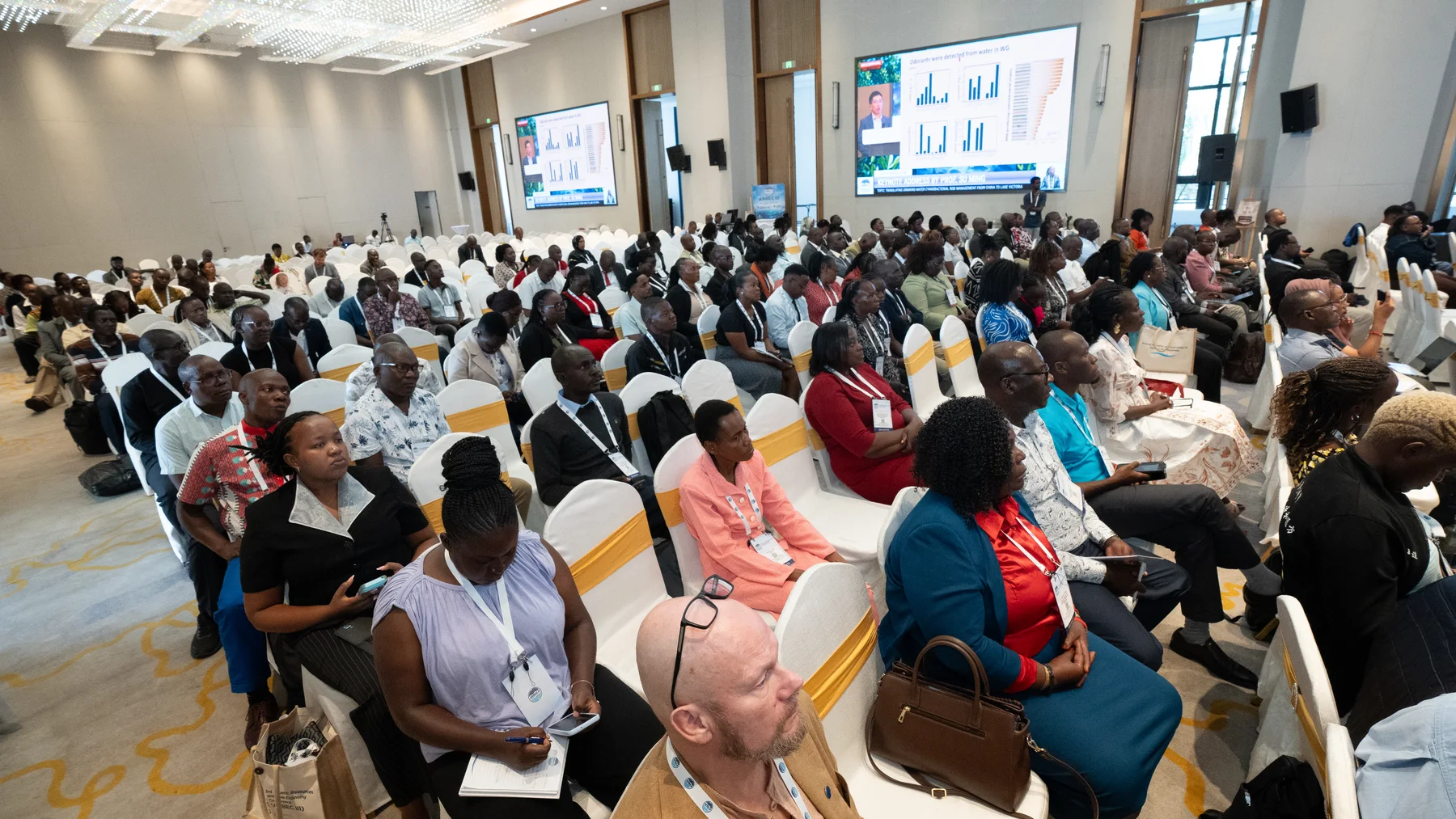
The ARBEC III conference audience.