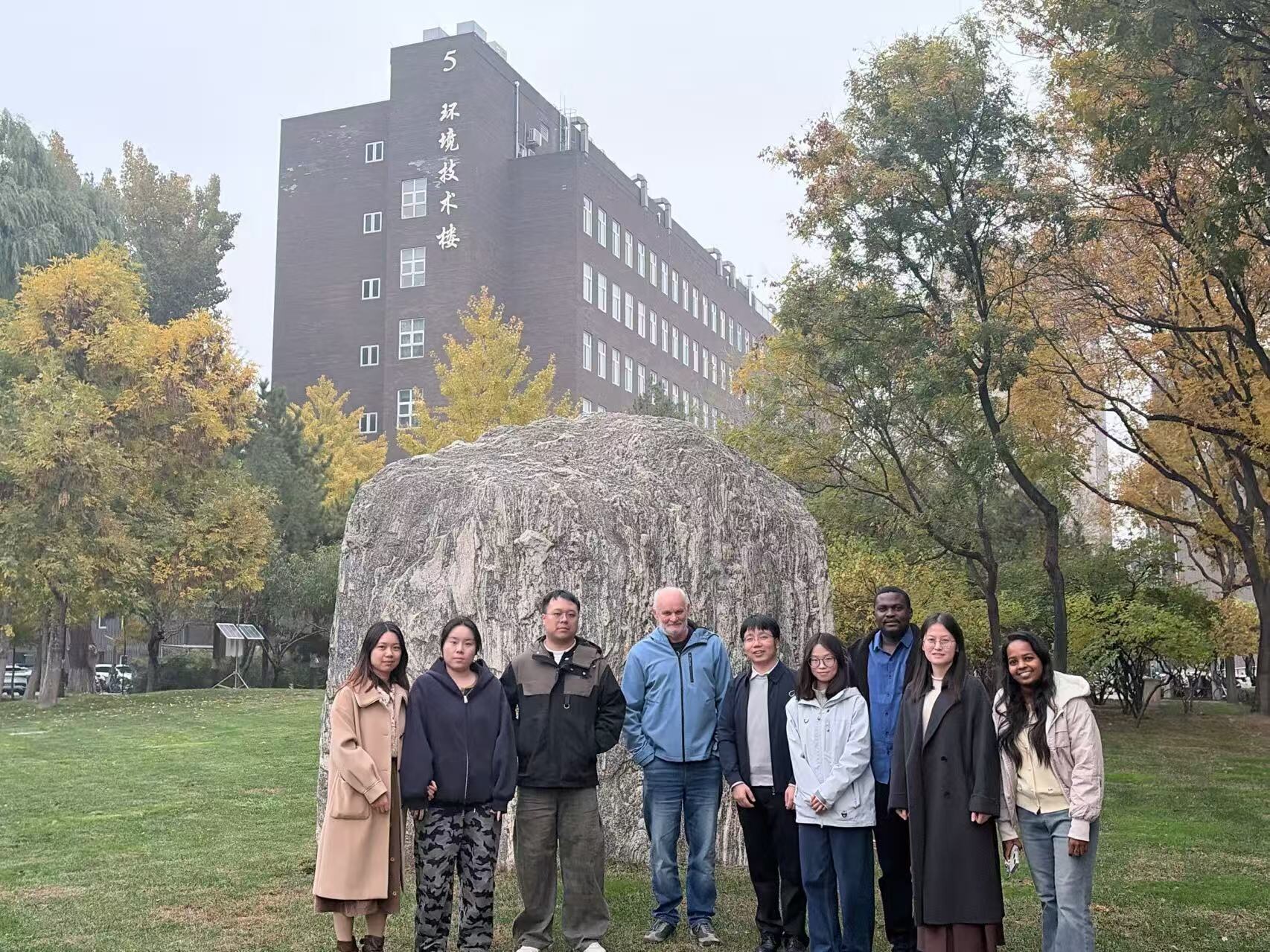
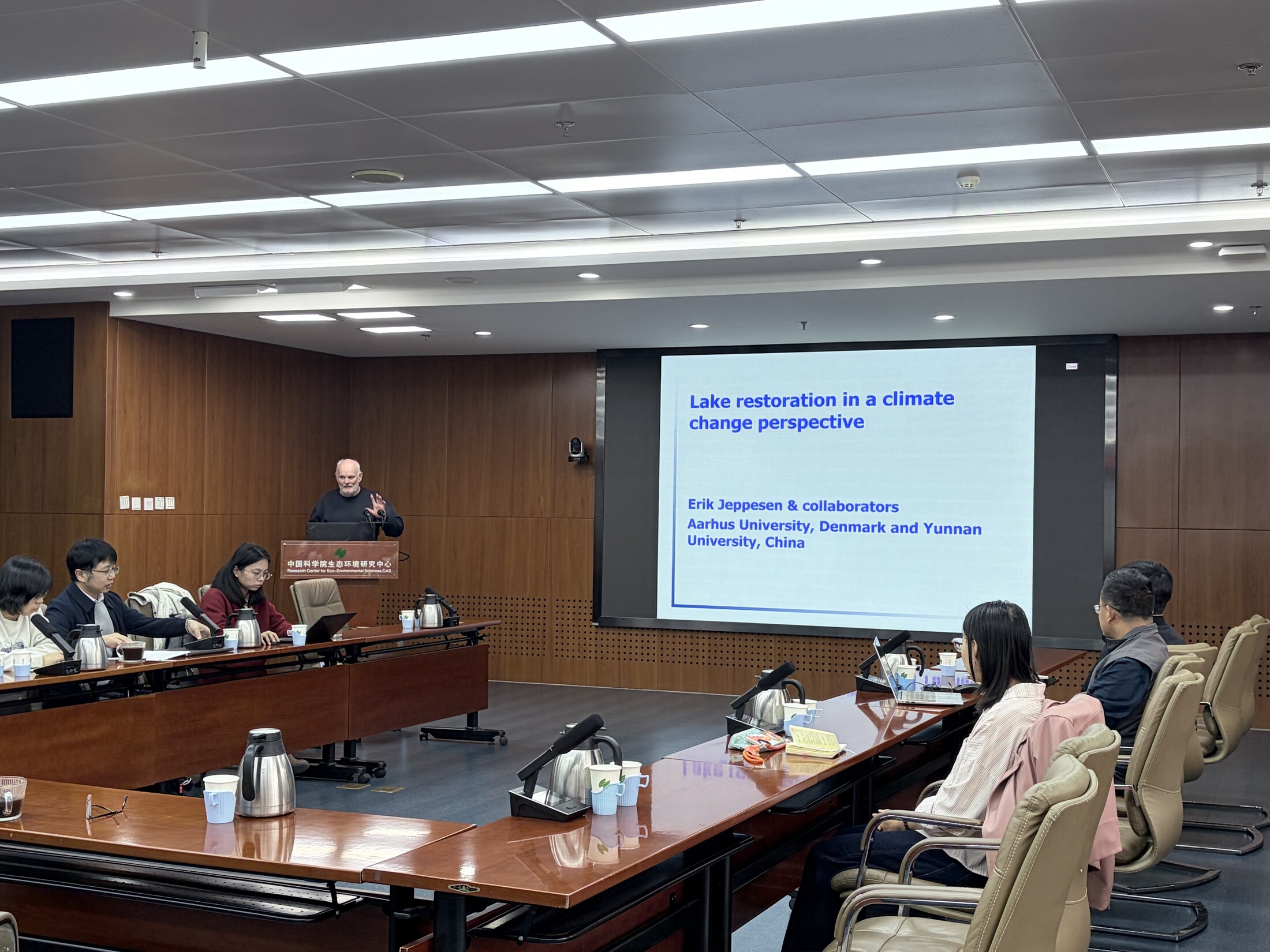
On November 4, Professor Erik Jeppesen of Aarhus University and Visiting Professor at Yunnan University visited the Research Center for Eco-Environmental Sciences (RCEES), Chinese Academy of Sciences, to present a seminar titled “Lake Restoration in a Climate Change Perspective.” The seminar was hosted by the National Engineering Research Center for Industrial Wastewater Harmless Treatment and Resource Recovery and was followed by an exchange with faculty and students.
Professor Jeppesen’s research spans aquatic ecology, climate change, lake restoration, and eutrophication control. He has published more than 1,000 SCI-indexed papers, including work in Science, PNAS, Nature Climate Change, and Nature Geoscience. His distinctions include the Naumann–Thienemann Medal and the 2025 Freshwater Ecology Award from the International Ecology Institute, and he has contributed to the work of the Intergovernmental Panel on Climate Change.
Drawing on lake studies and restoration cases from different regions, Professor Jeppesen outlined approaches based on nutrient control, biomanipulation, and integrated ecological restoration. He examined how warming affects cyanobacterial growth and the outcomes of restoration efforts. Reducing external nutrient loading is fundamental, he noted, but restoration plans must also account for lake type, internal nutrient release, and food-web structure. Locally tailored measures, supported by sustained monitoring and management, are therefore essential for lasting improvement.
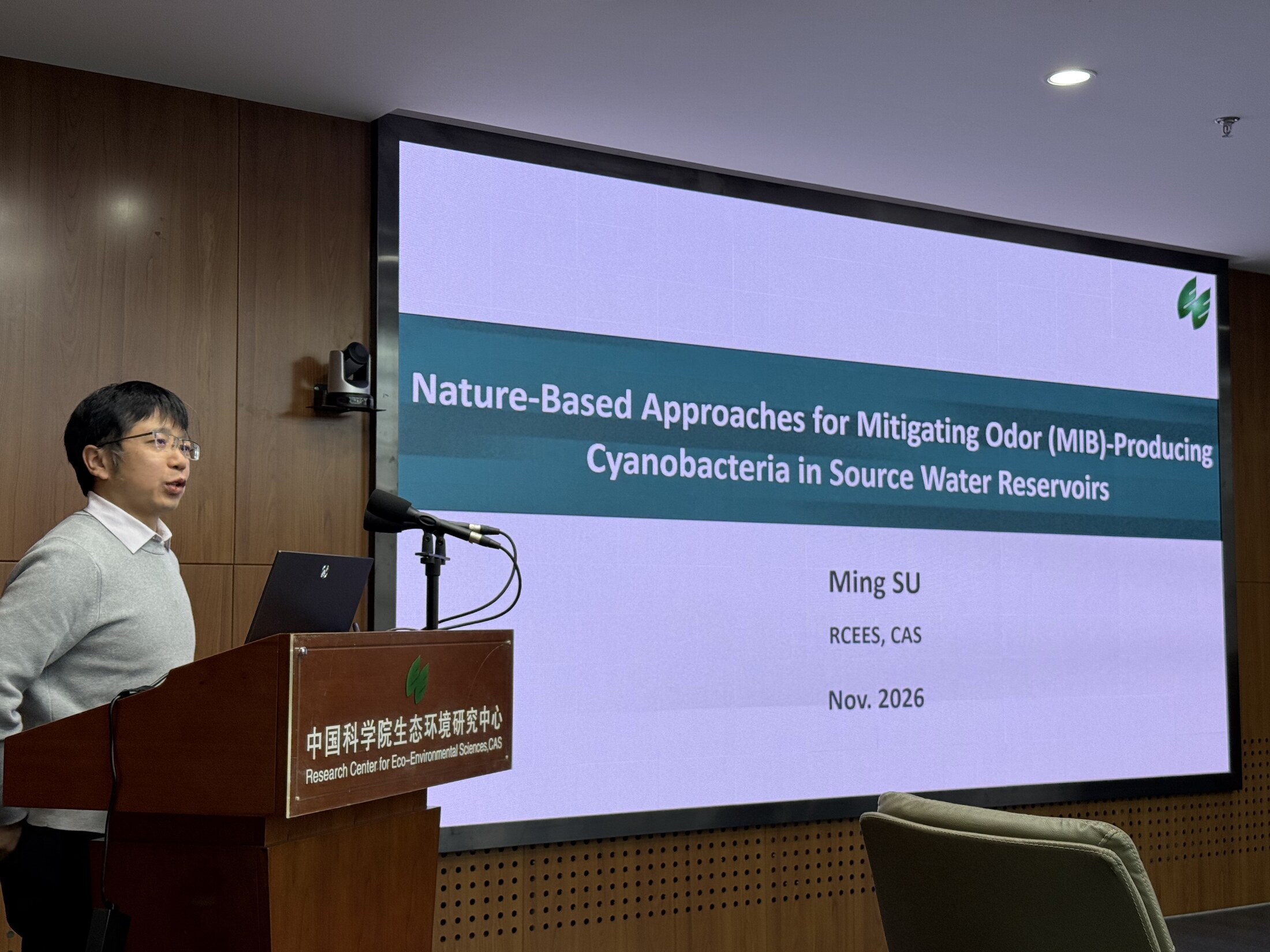
Following the seminar, Professor Ming Su presented the group’s work on nature-based approaches for mitigating odor-producing (MIB) cyanobacteria in source-water reservoirs. Students then reported their ongoing research and plans for the next stage. The participants discussed ways to sharpen research questions, improve experimental designs, and advance future work. Professor Jeppesen offered targeted suggestions for strengthening the projects and moving the research forward.
The visit deepened the group’s understanding of lake restoration in a changing climate and provided useful perspectives for refining research questions, improving study designs, and developing international collaboration.